

Join 160+ who found relief in just weeks.
Reclaim Your Life from Depression-Experience Relief with Guided Ketamine Therapy.
Discover a new path to healing at MindWell, through our transformative Ketamine therapy.
- Expert-guided care you can trust
- Gentle, low-impact infusion sessions
- Safe and effective
What is Keta Therapy?
Ketamine treatment, also known as ketamine therapy, involves the use of ketamine to alleviate symptoms of conditions such as depression, anxiety, and post-traumatic stress disorder (PTSD). It is typically administered intravenously or via a intramuscular injection.
The use of ketamine in mental health treatment is still a relatively new area of research but early studies have shown promising results.


Welcome to Your Comfort Zone
- Comfortable treatment chairs for total relaxation
- Noise-Cancelling Headphones
- Handpicked playlists for soothing, uplifting vibes
- Plush blankets to wrap you in warmth and calm
- Seamless coverage through leading insurance providers

Join 160+ people like you who got their life back.
What Does Ketamine Treat?
Depression
Anxiety
Bipolar Disorder
OCD
PTSD
Suicidal Ideation
Substance Abuse
Chronic Pain
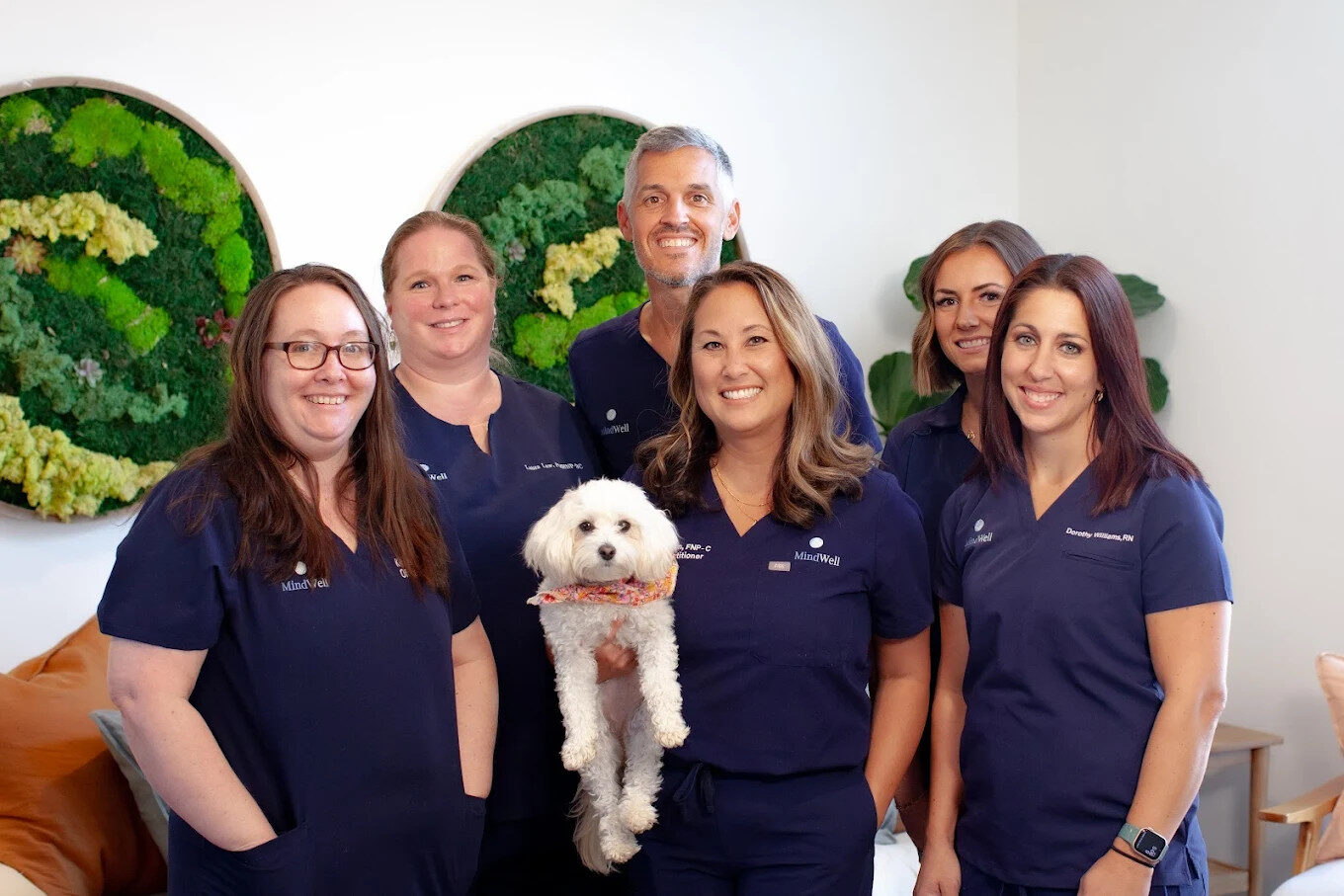
Dedicated Experts, Here for You
Highly experienced professionals dedicated to your safety, comfort, and lasting relief.





It worked for them. It can work for you.
"[...] It's been life-changing. My mood is better. I have more confidence. I just have a better quality of life..."
Rosemary
Retired Teacher
"[...] They're just great here. I just love them all. They're super nice, super welcoming. I mean it's just from day one the initial consult up until now like it's they're amazing here..."
Adrian
Long-Time Sufferer of PTSD/Depression
"[...] Now I can like comfortably relax and just read and all the things I ever wanted to do that I could..."
Jason
Patient, Overcame Crippling Anxiety
Join 160+ people like you who got their life back.
Your 3-Step Path to Relief
Schedule Your Appointment
Book your free, confidential consultation online. Don't worry about the complexity—we make the first step the easiest.
Get Assessed and Qualified
Meet with our experts. They listen to your history, answer your questions, and design your personalized treatment road map.
Start Your Healing Journey
Begin gentle, low-impact infusions in our spa-like setting. This is your time to finally process and heal.
Your Ketamine Therapy Questions, Answered.
What is Keta Therapy?
Ketamine is an anesthetic medication originally developed in 1970 and approved by the FDA for surgical anesthesia. It is on the World Health Organization’s list of essential medicines due to its well-established safety profile.
At much lower doses than used for anesthesia, ketamine has been studied for its potential to relieve symptoms of certain mental health conditions. When used for mental health, ketamine treatment is considered “off-label,” meaning it is not specifically approved by the FDA for this purpose but is used based on growing clinical evidence and physician judgment.
Research has shown that sub-anesthetic doses of ketamine can, in carefully selected patients, reduce symptoms of depression, anxiety, PTSD, and bipolar depression. It may also help with certain types of severe or chronic pain when administered in a controlled medical environment.
Is Ketamine safe?
Yes. Ketamine is safe and is used daily in hospitals and clinics around the world, and has been for decades.
To ensure safety, ketamine infusions should be administered by medical professionals trained in anesthesia or emergency medicine.
What conditions does Ketamine treat?
Does Ketamine have side effects?
During the infusion, the most common side effect of ketamine is mild nausea. In rare cases, patients may experience allergic reactions, elevated blood pressures, elevated heart rate, or cardiac arrhythmia (FDA). A monitoring physician will intervene in the case of any of these effects .
There are no known negative long-term effects of ketamine when used at the appropriate doses for depression and anesthesia. Select cases of long-term, daily use of ketamine by those who abuse the drug have shown some negative effects on the bladder and on cognition (Yale) .
Is Ketamine right for me?
For many patients, ketamine can be an exceptionally effective option to relieve symptoms of depression. It can help people even when other treatments have not worked.
Studies have shown that ketamine relieves depressive symptoms for 75% of patients with depression, including Major Depressive Disorder and Treatment-Resistant Major Depressive Disorder. This is compared to antidepressant prescription medications, which have shown to be effective in as few as 30% of people with depression, and often include extensive side effects.
Some patients experience relief after one infusion, some experience relief after multiple infusions, and some patients receive infusions without obtaining any relief. Each individual has their own experience, and the outcome of their infusion treatment plan may not match the results found in studies or experienced by other patients. (Nature)
What happens after my consultation call?
How does Ketamine compare to SSRI's?
Over the past few decades, selective serotonin reuptake inhibitors (SSRIs) have been widely prescribed to address depression. SSRIs are based on the chemical imbalance theory of depression – that adding more serotonin to one’s system will lead to an improvement of mood. Literature supports that SSRIs have a 30 – 50% effectiveness rate for people with depression (here) . They require a steady state of medication in one’s system over time to have an effect. SSRIs often result in significant side effects and can take 6 to 12 weeks in the system before working. People often experience additional withdrawal symptoms when they stop taking SSRIs.
Ketamine’s benefits occur via the neural network theory of depression. Treatment leads to a structural reset of the emotional reward system in the brain. Patients who have a generally low baseline mood achieve a new normal from which they can appropriately feel good when good things happen and appropriately feel bad when bad things happen. These new neural connections triggered by ketamine often happen within the first 72 hours. Literature supports that ketamine has a 75% efficacy rate for people with Treatment Resistant Depression. These positive results do not depend on the chemical staying in the body over time. Treatment results in few-to-no side effects, and stopping treatment at the dosage and frequency we administer does not result in any unwanted withdrawal symptoms.
Patients report that even though SSRIs may help stabilize their mood, they result in a “flatness”, “emotional numbness”, or a “mental fog.” The medication makes them feel less like themselves by bringing down their emotions and therefore their depressive symptoms. These same patients have described how ketamine has helped them feel more like themselves by creating an emotional baseline to appropriately feel emotions and reframe core issues that have contributed to their depressive state.
Is Ketamine for mental health experimental?
Is Ketamine addictive?
Is Ketamine an opioid?
No. Opioids are substances that bind with opioid receptors in the brain. Ketamine has been found to interact with the Mu Receptor (an opioid receptor in the brain) and also interacts with many other receptors in the human brain (Wiki) .
Unlike opioids, ketamine does not cause euphoria, it does not slow down or stop breathing, and it is not addicting.
How much will my treatment cost?
Will insurance cover my treatment?
How long does the treatment take?
How many treatments will I need?
How long will I need treatments?
For most patients, ketamine relieves depressive symptoms for an average of six weeks after each infusion. Patients may receive booster infusions as depressive symptoms recur JAMA.
We work with each patient to identify a suitable maintenance program. Sometimes, this consists of a regular cadence of infusions according to a patient’s needs and schedule. Some patients find that their need for boosters becomes less frequent over time, prompting them to come in every 2 – 3 months. In some cases, patients experience full remission of their depressive symptoms and do not feel the need to seek continued treatment Yale.
Ketamine boosters may be given for as long as needed with no known long-term side effects.
What if I don't have a referral?
At MindWell Health, you don’t need a referral. We only provide ketamine treatment to people who are working with an accredited and trusted healthcare provider, including psychiatrists, psychologists, therapists, or primary care providers.
This is important to us for several reasons: For one, we never want to be the ones to diagnose people directly with depression or encourage our therapy if there are other options that might be of greater help. Second, data shows that ketamine treatment is most effective when accompanied by continuous therapy.
For those not yet connected to a provider, we’re happy to help. We’ve built a strong and trusted network of mental health professionals who can assess symptoms of depression and discuss whether ketamine is an appropriate option.
What if I'm on another antidepressant?
While starting ketamine infusion therapy, the concurrent use of other antidepressant medications will not interfere with ketamine’s effectiveness for addressing depressive symptoms, nor will it cause negative medication interactions. Many patients who experience relief from ketamine have found that over time, they can reduce or eliminate other antidepressent medications. We advise each patient to work with their prescribing physician to tailor a plan.
Will other medical conditions keep me from being treated?
There are no medical conditions that prevent you from getting ketamine treatment. That said, ketamine is not advised for patients with schizophrenia, mania, or uncontrolled heart or blood pressure issues, so we would approach those on a case by case basis.
Our physician reviews the medical history of each patient prior to treatment. All patients are closely monitored during treatments by an extensively trained clinical team to ensure the safety of the treatment.
What if I don't live in Greenville?
While the majority of people we treat live in or around Greenville, we make every effort to accommodate the needs of those who come to us from farther away.
We administer six foundational ketamine treatments to all new patients over a 14 day period. For those coming in from out of town, this often entails a week-long stay in the Greenville area, or two, three-day visits over the course of two weeks. That said, we tailor treatment plans based on individual medical needs and travel restrictions.
After the foundational treatment, we provide infusions as depressive symptoms may recur, and will continue to work with individual calendars and travel plans as needed. For those new to the area, we’re happy to recommend nearby accommodations.